Shokuiku: a Japanese Blueprint for Conscious, Healthy Eating

Promoting Optimal Wellness for Body, Mind and Spirit

Promoting Optimal Wellness for Body, Mind and Spirit

February is National Cancer Prevention Month. Some risks for cancer are out of your control (E.g. age and genetics.) Research shows that you can control other risk factors such as healthy eating and regular exercise to help lower the risk of cancer.

Recommendations for prevention includes –

  1. Maintain a healthy weight.
  2. Engage in physical activity at least 30 minutes every day. (Check with your doctor before beginning if you have not been exercising.)
  3. Avoid sugary drinks and food.
  4. Eat a plant-based diet (fruits, vegetables, whole grains and legumes.)
  5. Limit red meat (beef, pork, lamb.)
  6. Avoid processed foods and limit salt.
  7. Limit alcohol. (No more than 2 drinks per day for men, 1 for women.)
  8. Avoid all tobacco products!

Teach Your Children Healthy Eating; Tips From Japan – What is learned at a young age is more likely to become lifetime habits, bad or good. The Japanese government requires that all children receive education in healthy eating. Shokuiku means “eating education.” Dr. Yukio Hattori, who coined the term more than a decade ago calls it a blueprint for conscious eating.

Shokuiku is taught in every Japanese public school, starting in kindergarten. Students learn to:

  • Start the day with a healthy breakfast.
  • Use fresh, seasonal ingredients.
  • Avoid buying foods from convenience stores.
  • Choose a traditional Japanese meal over fast food.

Traditional Japanese Meal. Traditional Japanese meal is based on rice, along with soup and other side dishes. The side dishes often consist of pickled vegetables, and vegetables cooked in broth. Fish is common in the traditional Japanese cuisine.

The 'Captain Joe' Sushi Roll at the Studio Gloucester MA copy

Expressing Gratitude Before and After Your Meal. In Japan, gratitude is expressed before and after every meals similar to saying grace or ‘bon appetit’ in the West. Itadakumasu is spoken before meals and means “I humbly receive (this food/meal).” It is used to show gratitude for the food and everything that went into the meal, all the way from farm to table. After the meal, Gochisōsama is spoken and means “thanks for the food.” Gochisō literally means “feast,” so the translation is something like “It was a feast.” Often these words of gratitude are spoken while having palms pressed together, head slightly bowed in ‘gasshō.

Beautiful copper Buddha statue at a shrine near Senso-ji Temple, Asakusa, Tokyo, Japan

‘Gasshō.’ Buddha statue at a shrine near Senso-ji Temple, Asakusa, Tokyo, Japan.

Teach your children well, and enjoy your healthy meal with gratitude, and be well.   ~  Karen

Karen Pischke B.S.N., R.N., C.C.R.N. Alumnus. Certified Hypnotherapist, Tobacco Treatment Specialist, Usui Reiki Teacher/Komyo Shihan. Owner/Founder of Dreamtime Wellness™ Promoting Optimal Wellness for Body, Mind & Spirit www.DreamtimeWellness.com. Find us on Facebook – https://www.facebook.com/pages/Dreamtime-Wellness-/348619611849199

Disclaimer: This blog pro­vides gen­eral infor­ma­tion and dis­cus­sion about health and related sub­jects. The words and other con­tent pro­vided in this blog, and in any linked mate­ri­als, are not intended and should not be con­strued as med­ical advice. If the reader or any other per­son has a med­ical con­cern, he or she should con­sult with an appropriately licensed physi­cian or other health care worker. Never dis­re­gard pro­fes­sional med­ical advice or delay in seek­ing it because of some­thing you have read on this blog or in any linked materials. If you think you may have a med­ical emer­gency, call your doc­tor or 911 immediately. The views expressed on this blog and web­site have no rela­tion to those of any academic, hospital, practice or other insti­tu­tion with which the authors are affiliated.

Sources and More Information – 

De-Stress During the Holiday Season … and Beyond

Dreamtime Wellness ™

Promoting Optimal Wellness for Body, Mind and Spirit

Got Stress?? 

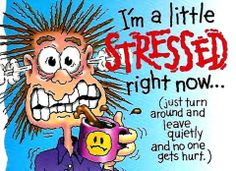
Stress 465cd4826004c9b136a5623d1de54d11

You are not alone. And the Holiday Season can be an especially stressful time for many with added financial strain, grief and sadness over those we have loved and lost, and overwhelming, over-commitments. 

According to the 2014 annual Stress in America™ survey by the American Psychological Association (APA) the Top 4 sources of stress are –

Money, Work, Family Responsibilities, and Health Concerns.

The APA study also found –

  •  72% of Americans reported feeling stressed about money at least some of the time during the past month.
  • 22% said that they experienced extreme stress about money during the past month
  • Parents, younger generations and lower-income households (less than $50,000.00 annual income) have higher stress than others overall
  • Some people are putting their health care needs on hold because of financial concerns.
  • Stress about money impacts relationships
  • 22% say they are not doing enough to manage their stress.
  • American stress levels have been trending down since the annual survey first began in 2007, but still “higher than healthy levels.”

Here’s Some Good News – 

  • Americans who have some emotional support report lower stress levels
  • Help is Available!

If you are experiencing negative stress in your life, or feel overwhelmed by stress seek help! Talk to your doctor. Ask about professional counseling. Look into resources in the community. Talk to family and friends for emotional support.

Remember – You are not alone! Stress is a normal and unavoidable part of life. Some stress is even considered positive, such as the stress that motivates us to accomplish a task. But too much negative stress can negatively affect your emotional and physical health and wellbeing. Especially when it occurs on a daily basis.

Stress Response – The response to stress can be physical and emotional tension, pain, lowered immune response, and inflammation. Chronic stress can lead to chronic disease including high blood pressure, endocrine, metabolic, autoimmune, and mental health disorders.

RELAX and DE-STRESS – The opposite of the stress response is the relaxation response. Methods to relax and de-stress include: acupuncture, art therapy, deep breathing, exercise, hypnosis, laughter/humor, massage, mindfulness, meditation, music and dance, reading, reiki, tai chi, and yoga. Consider incorporating complementary and integrative therapies into your ‘wellness care plan.’ Learn techniques that you can incorporate daily for ‘best results.’ 

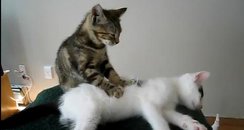
cat-massage-1314024431-article-0

REMEMBER to BREATHE. When stressed, people often breathe more shallow or even hold their breath. Breathing relaxation techniques are simple to learn, fast and effective to use, and available 24/7.

WALK or DRIVE by the OCEAN. Views of the water can change your psychology and physiology. Just ask Joey who is lucky to enjoy the View from the Dock every day! Take a drive along BackShore Gloucester or walk Good Harbor or Singing Beach and you will a relief of tension and experience your blood pressure lowering.

Lucky to Live on Cape Ann!

Continue reading

Practice Gratitude – It’s Good for Your Health

Promoting Optimal Wellness for Body, Mind and Spirit

Promoting Optimal Wellness for Body, Mind and Spirit

grat·i·tude ˈɡradəˌt(y)o͞od/

noun
  1. the quality of being thankful; readiness to show appreciation for and to return kindness.
    “she expressed her gratitude to the committee for their support”
    Synonyms: gratefulness, thankfulness, thanks, appreciation, recognition, appreciation

gratitude

A Sense of Gratitude Improves Your Health 

Studies on gratitude support an association between gratitude and a sense of well being.  One study by Dr. Robert A. Emmons of the University of California, Davis, and Dr. Michael E. McCullough of the University of Miami, leaders in the field of research on gratitude showed that after keeping a ‘gratitude journal for 10 weeks, people were

  • more optimistic
  • felt better about their lives
  • began to exercise more
  • went to the doctor less often.


Practicing Gratitude Enhances Relationships

In one study, individuals who took time to express gratitude for their partner felt more positive toward the other person and felt more comfortable expressing concerns about their relationship.

Expressing Gratitude to Employees Motivates Them 

People want to feel that they are doing a good job and are members of a team. The best way to promote teamwork and motivate employees is to treat staff as valued members of the team.

10 Ways to Practice Gratitude:

  1. Count Your Blessings
  2. Keep a Gratitude Journal
  3. Thank Someone (Mentally or Out loud)
  4. Write a Thank-You Note Once a Week
  5. Practice Optimism
  6. Daily Prayer
  7. Daily Mindful Meditation
  8. Promote Teamwork (at Home and Work)
  9. Celebrate Successes
  10. Perform Acts of Kindness

Gratitude Tree 40f31d1f4b765d68a0b3e3edeef86859

Sources and More Information

Digdon, N and Koble, A.  Effects of Constructive Worry, Imagery Distraction, and Gratitude Interventions on Sleep Quality: A Pilot Trial. July 2011. Applied Psychology: Health and Well-Being. Vol 3. No 2. pages 193–206

Emmons RA, et al. “Counting Blessings Versus Burdens: An Experimental Investigation of Gratitude and Subjective Well-Being in Daily Life,” Journal of Personality and Social Psychology(Feb. 2003): Vol. 84, No. 2, pp. 377–89.

Grant AM, et al. “A Little Thanks Goes a Long Way: Explaining Why Gratitude Expressions Motivate Prosocial Behavior,” Journal of Personality and Social Psychology (June 2010): Vol. 98, No. 6, pp. 946–55.

Lambert NM, et al. “Expressing Gratitude to a Partner Leads to More Relationship Maintenance Behavior,” Emotion (Feb. 2011): Vol. 11, No. 1, pp. 52–60.

Layous, K, et al. Delivering Happiness: Translating Positive Psychology Intervention Research for Treating Major and Minor Depressive Disorders. The Journal of Alternative and Complementary Medicine, 2011; 17 (8): 675

Roberts, H. (2005). Creating motivation, identifying incentives and enablers, and encouraging staff development. Community Eye Health18(56), 122–124

Sansone RA, et al. “Gratitude and Well Being: The Benefits of Appreciation,” Psychiatry (Nov. 2010): Vol. 7, No. 11, pp. 18–22.

Seligman MEP, et al. “Empirical Validation of Interventions,” American Psychologist (July–Aug. 2005): Vol. 60, No. 1, pp. 410–21.

How to Keep a Daily Gratitude Journal– Write ‘3 things to be Grateful for’ Daily. Do this for 21 days and it becomes a habit.

Here are my ‘3 things to be grateful for today,’ – 

1) I am Grateful for the Beauty of Last Night’s Full Moonrise Over the Ocean. (2) I am Grateful for Today’s Sunshine. (3) I am Grateful to Have Work That Brings Me Joy.

Easier to Feel Grateful When Living on Cape Ann.   ~ Happy Thanksgiving.    Karen

NSMC Cancer Walk – Celebration of Life, Hope and Courage. This is Worth Going Over the Bridge For!

NSMC 25th-Logo
A Celebration of Life, Hope and Courage. NSMC Cancer Walk. Sunday. June 28th. 7:30 a.m. – 12 p.m.  At the Salem Willows.
This Year is the 25th Anniversary of the North Shore Medical Center’s Cancer Walk. Money raised from the North Shore Cancer WALK/RUN will support the construction of the new inpatient oncology unit at North Shore Medical Center as well as wellness services and support programs at the Mass General/North Shore Cancer Center in Danvers, MA.
This event is worth going ‘over the bridge’ for! Cape Ann/Gloucester has a wonderful oncology department at Addison Gilbert, but many Cape Ann and north shore residents also use the facilities at MGH/NS Cancer Center in Danvers for cancer treatment and follow-up.
For information on this event, to participate or donate –
 Sample Reiki Sessions from 8 a.m. – 12 p.m. at the ‘Wellness Tent.’  Free to participants of the Relay. ‘By Donation’ for others. (100% of Donations to Benefit the NSMC Cancer Walk.) Come and enjoy a sample of Reiki for ‘relaxation, rest and renewal.’ (Massage Therapists will be there too!) Dreamtime Wellness™ will be there, along with nurse Nancy Earabino, a Reiki Teacher and Reiki Provider for NSMC Wellness.
Reiki – (ray-kee) is a Japanese Healing Method/Art that began in 1922 with founder, Mikao Usui Sensei. Reiki sessions are offered through light (or non) touch and without manipulation. Generally considered safe, Reiki is offered in the oncology settings as part of comprehensive integrative medicine departments. Preliminary studies indicate a potential for relief of anxiety and pain with Reiki. More rigorous, larger studies are needed.
Reiki at NSMC FB

Reiki in Hospitals and Healthcare

Integrative Healthcare – Key words – Collaborative, Comprehensive, Safe, Effective, Care.  In the oncology setting, complementary integrative therapies such as acupuncture, massage, meditation, Reiki and yoga are offered primarily as supportive care for symptom management, such as:
  • Relief of anxiety,
  • Improved sleep,
  • Improved comfort,
  • Improved quality of life,
  • Greater sense of wellbeing.
Note – Reiki and other Complementary Therapies are not meant to replace or ‘take the place of” conventional (western/mainstream) medicine, but are best offered ‘in combination’ and after rigorous studies have been done to verify safety and effectiveness. “Integrative medicine“combines mainstream medical therapies and Complementary and Integrative medicine (IM) therapies for which there is some high-quality scientific evidence of safety and effectiveness.”
Ask your physician/oncologist beforehand about using CAM. Start the conversation – If you are using CAM therapies, let your physician/oncologist know. **Some supplements/herbs/over the counter medications may interact with and/or negatively affect your treatment. ‘When in doubt, check it out’ and talk to your physician! Trust, rapport and open communication are important for safe, effective care. 
Sources and more information on Reiki Therapy and other Complementary & Integrative Therapies for patients undergoing treatment for cancer and how to choose a qualified provider  –
Having offered Reiki as the RN/Reiki Provider at NSMC for 12 years and the MGH Cancer Center for 9 years, this event is especially close to my heart. During that time, I saw many of my friends, neighbors and their families when they were there for cancer treatment. It was an honor and a privilege to help support them through their care and hopefully make their treatment more bearable, and their lives a little more comfortable.  ~ Karen Pischke BSN, RN, Reiki Provider & Teacher
Patients receiving Reiki while undergoing treatment for cancer have often relayed “a greater sense of HOPE.”   

“Hope is the thing with feathers– That perches in the soul– And sings the tune without words– And never stops–at all…” – Emily Dickinson

Bird feather on water surface with free space for text

HOPE Never Stops

~ Remembering those we’ve lost. ~ Honoring and supporting those in treatment. ~
~ Commemorating survivors. ~  With Gratitude. ~

Karen Pischke B.S.N., R.N., Certified Clinical Hypnotherapist, Reiki Teacher/Shihan, Tobacco Treatment Specialist. In addition to a private wellness business, Karen has been employed as the RN/Reiki Provider and Hypnotherapist at NSMC, RN/Reiki Provider at Mass General Cancer Center (Danvers and Boston,) and currently is the RN/Reiki Provider at Lahey Danvers Outpatient Center/for the Pain Management Integrative Healthcare. Owner/Founder of Dreamtime Wellness™ Since 2000. Promoting Optimal Wellness for Body, Mind & Spirit. More information can be found at –www.DreamtimeWellness.com. Follow on Facebook – https://www.facebook.com/pages/Dreamtime-Wellness-/348619611849199

Disclaimer: This blog pro­vides gen­eral infor­ma­tion and dis­cus­sion about health and related sub­jects. The words and other con­tent pro­vided in this blog, and in any linked mate­ri­als, are not intended and should not be con­strued as med­ical advice. If the reader or any other per­son has a med­ical con­cern, he or she should con­sult with an appropriately licensed physi­cian or other health care worker. Never dis­re­gard pro­fes­sional med­ical advice or delay in seek­ing it because of some­thing you have read on this blog or in any linked materials. If you think you may have a med­ical emer­gency, call your doc­tor or 911 immediately. The views expressed on this blog and web­site have no rela­tion to those of any academic, hospital, practice or other insti­tu­tion with which the authors are affiliated.